








The National Pharmaceutical Regulatory Agency (NPRA) continues to monitor registered products and notified cosmetics in the local market to ensure the compliance of regulatory requirements in terms of quality, safety, and efficacy.
This summary highlights the key activities and programs undertaken by the Surveillance and Complaints Section (SVA), Centre for Compliance and Quality Control (CCQC), NPRA in 2025, focusing on six primary activities, as below:

1. SAMPLING OF REGISTERED PRODUCTS AND NOTIFIED COSMETICS
Sampling of registered products and notified cosmetics that are available in the local market, is carried out proactively and reactively to monitor compliance. Regulatory oversight in post-marketing surveillance is currently transitioning from conventional sampling toward a more focused, risk-based approach under the Risk-Based Product Quality Monitoring (RB PQM) Programme. Using risk matrix tools, product selection is guided by product characteristics, compliance history, and market signals.
A new approach for sampling registered products which has been initiated in a hybrid manner, namely risk-based sampling (RBS), continued as full RB PQM consist of RBS and risk-based testing (RBT) in 2025. The implementation of the RB PQM approach aims to ensure that the RB PQM Programme remains sustainable, systematic, and effective in optimizing the use of limited resources.
The notified cosmetics were also sampled based on the RBS Sampling method in which cosmetics with a higher risk of containing prohibited substances (e.g. whitening creams, baby-use cosmetics etc.) were prioritized.
In cases involving stock unavailability at the Product Registration Holders (PRHs) or Cosmetic Notification Holders (CNHs) level, the NPRA will conduct random test purchases from the market to obtain the products and cosmetics for sampling and analysis, thereby ensuring continuity and effectiveness of post-market surveillance activities.

In 2025, a total of 2488 samples were collected: 1863 (75%) notified cosmetics and 625 (25%) registered products as shown in Chart 1. Among the 625 registered products were:
I. 309 (13%) products of Prescription or Scheduled Poison (A)
II. 80 (3%) products of Over the Counter – OTC (X)
III. 29 (1%) products of Health Supplement (N)
IV. 207 (8%) products of Natural (T) Category
1.1 Laboratory Testing

A total of 2,188 samples were tested, comprising 654 registered products and 1,534 notified cosmetics. The sample tested for notified cosmetics comprising 646 locally manufactured samples (42.1%) and 888 imported samples (57.9%). A total of 88 samples were found to be out of specification (OOS) or had failed results, comprising 49 registered products and 39 notified cosmetics, as illustrated in Chart 2.
As a consequence of these OOS findings, regulatory actions such as warnings, product recalls, suspension of registration, and cancellation of registration or notification were imposed on the PRHs of the registered products and CNHs of the notified cosmetics.
1.2 Regulatory Action: Recall
One of the regulatory actions is a product/cosmetic recall, which is an action taken by its PRH/CNH, licensed manufacturer, licensed importer, licensed wholesaler to remove or withdraw a particular product/cosmetic from the market or to retrieve the product/cosmetic from any person to whom it has been supplied.
Chart 3 shows the number of registered products and notified cosmetics in the year 2025 that have been recalled with its degrees and levels. A total of 55 products, comprising 30 registered products and 25 notified cosmetics, were instructed to recall from the market. There were 1 (2%) recalls for registered products with Degree I, 10 recalls with Degree II and 19 recalls with Degree III, mainly due to quality defects.

Meanwhile, for notified cosmetics, a total of 25 recalls were conducted, comprising 17 recalls classified as Degree III and 8 recalls involving Degree II accompanied by notification cancellations. These recalls involved cosmetics that tested positive for prohibited substances listed in the Scheduled Poisons List under the Poisons Act 1952.
However, there remains a possibility that consumers may continue using recalled cosmetics. To safeguard public health, the Ministry of Health (MOH), through the National Pharmaceutical Regulatory Agency (NPRA), issues press releases advising the public to immediately discontinue the use of affected cosmetics.
In 2025, the NPRA issued and published a total of six (6) press releases involving 14 cosmetics and one registered product, on NPRA’s official website (www.npra.gov.my). These press releases were also shared with other regulatory authorities through the ASEAN Post-Marketing Alert System (ASEAN PMAS) to facilitate regional information sharing and coordinated regulatory responses among ASEAN Member States.
This approach reflects proactive regulatory engagement and effective dissemination of safety-related information, thereby supporting timely risk mitigation measures and enhancing consumer protection across the ASEAN region.
1.3 Label Review
Label review is another important activity to ensure the information and details on product labels and packaging inserts comply with the stipulated regulatory labelling requirements.

In 2025, a total of 1,118 product labels were reviewed, comprising 581 labels of registered products and 1,623 labels of notified cosmetics, as shown in Chart 4.

Of the registered products reviewed, 114 labels (20%) were found to be non-compliant with established labelling requirements. In such cases, warning letters and label recall were issued to the respective PRHs to ensure corrective actions are taken.
A total of 58 (10%) natural products (category T) were found to have the highest number of non-compliances with labelling requirements (refer to Chart 5). Examples of labelling non-compliances include:
i. Details of the manufacturer and product registration holder (PRH) on the product label is different from the approved label;
ii. Repeated non-compliance with labelling requirements despite the issuance of warning letter;
iii. Product labels that use old labels that have had their registration number revoked;
iv. Failure to include the batch number, manufacturing date and expiry date on the product label;
v. Discrepancies with the information of the active ingredient and the dosage;
vi. Failure to include specific warning statements for certain ingredients;
vii. Use of stick-on labels for some unapproved labelling information and logos;
viii. Discrepancies between the information or graphics on the product label and the approved label.

Meanwhile, for notified cosmetics (Chart 6), a total of 1,074 products were found to be non-compliant with the stipulated labelling requirements. As a result, 1,060 warning letters were issued to the relevant CNHs while 14 cosmetic notifications were cancelled due to non-compliance. These regulatory actions demonstrate consistent measures undertaken to safeguard consumer safety and uphold regulatory integrity. Common examples of labelling non-compliances identified during surveillance activities include:
i. Missing information on the country of manufacture;
ii. Absence of a batch number;
iii. Cosmetic name inconsistent with the name notified;
iv. Labelling information provided only in a foreign language;
v. Missing name and address of the notification holder; and
vi. Inclusion of non-permissible claims on cosmetic labels, such as therapeutic or medicinal claims (e.g. claims to treat, cure, or prevent diseases), or claims that imply pharmaceutical effects beyond the scope of cosmetic use.
These data indicate that there is a higher incidence of non-compliance among notified cosmetics compared to registered products. This may be due to the different regulatory controls between registered products and notified cosmetics, where control over cosmetics is based on notification compared to products which are subject to full registration requirements. Stricter enforcement actions may be required in the future to overcome this problem and raise awareness among the cosmetic industry.
2. HANDLING OF COMPLAINTS ON REGISTERED PRODUCTS AND NOTIFIED COSMETICS

In 2025, the SVA received, investigated, and addressed a total of 1035 complaints and quality reports related to registered products and notified cosmetics. These reports covered various issues such as quality, efficacy, labelling, and packaging, and comprised 888 (86%) cases involving registered products and 147 (14%) concerning notified cosmetics, all handled in accordance with established procedures.
2.1 Quality Reporting of Registered Product

As illustrated in Chart 8, a total of 888 complaints regarding registered products were documented in 2025. A thematic analysis reveals that the majority of complaints were centred on quality (374 cases) and packaging (289 cases) defects, with common issues including empty blisters or fractured tablets and ampoules, representing approximately 74% of the total volume. These were followed by reports on efficacy (132), often linked to brand substitutions, labelling discrepancies (70) frequently involving look-alike sound-alike items or absent labels, and others (e.g. adverse events) (23).
Analysis of procurement categories reveals that reports were largely concentrated within government healthcare supply channels. The Approved Products Purchase List (APPL) accounted for the largest volume, with 404 complaints (45%), followed by Local Purchase (LP) at 201 cases (23%), Tender procurement at 196 cases (22%), and miscellaneous categories such as public complaints and private facility complaints, totalling 87 cases (10%). The higher number of complaints related to APPL-supplied products may be attributed to the increased production capacity required to meet public sector demand, which could potentially impact product quality.
2.2 Quality and Safety Reporting of Notified Cosmetic

As illustrated in Chart 9, the majority of complaints were related to manufacturing issues, accounting for 54 cases (37%), primarily involving manufacturer-related non-compliance. Examples of regulatory complaints included reports claiming that cosmetics were manufactured at facilities that did not comply with Good Manufacturing Practice (GMP) requirements, such as residential premises or shop lots. Other complaints involved declarations from manufacturers confirming that they had not undertaken any manufacturing or packaging activities for the cosmetics concerned.
This was followed by complaints concerning claims, with 42 cases (29%), indicating ongoing issues related to misleading claims and non-compliant cosmetics information. Complaints associated with prohibited substances, including reports of adverse effects and suspected adulteration, accounted for 34 cases (23%), highlighting the importance of continuous monitoring of cosmetic safety.
Meanwhile, quality-related complaints comprised 11 cases (7%), including issues such as packaging defects, as well as reports from healthcare facilities (e.g., hospitals and clinics) concerning cosmetics found to have quality defects, including fungal contamination, black spots, or visible foreign matter.
It should be noted that the use of notified cosmetics for treatment purposes in healthcare facilities is not appropriate. Therefore, it is recommended that the healthcare facilities take measures to ensure that only registered products/medicines are used for treatment or patient care purposes.
A smaller proportion of complaints fell under other categories, with 6 cases (4%), encompassing miscellaneous issues not classified under the main complaint categories, such as parallel import or counterfeit cosmetics.
Overall, the distribution of complaints underscores the need for continued regulatory oversight, particularly in addressing regulatory non-compliance and misleading claims, to protect consumer safety and ensure cosmetic compliance.
3. HANDLING OF REPORTS RELATED TO QUALITY ISSUES FROM PRODUCT REGISTRATION HOLDERS (PRH) AND FOLLOW-UP ON ALERTS/ DIRECTIVES
Maintaining the quality, safety, and efficacy of pharmaceutical products is paramount to protecting public health. This subtopic outlines the key activities carried out by the SVA in 2025 related to the handling of quality issue reports submitted by Product Registration Holders (PRHs) and the subsequent follow-up on alerts and directives.
A comprehensive analysis of these reports reveals key trends in product quality incidents within Malaysia, highlighting the prevalence of Out-of-Specification (OOS) incidents, voluntary recalls, and responses to specific regulatory directives and emerging impurity concerns. This overview provides valuable insights into the challenges and efforts involved in ensuring that registered products meet the quality standards.

As illustrated in Chart 10, Out-of-Specification and Impurity reports accounted for 33 cases (53%), while voluntary recall (VR) reports comprised the remaining 29 cases (47%). Together, these two categories represent a total of 62 handled reports related to quality issues and follow-up actions in 2025.
Out-of-Specification (OOS) reports predominantly originated from stability study deviations, specifically concerning dissolution parameters, assay precision, and related substances, including nitrosamine impurity thresholds. To mitigate identified risks, Product Registration Holders (PRHs) executed proactive voluntary recalls of the affected pharmaceutical batches, ensuring continued compliance with safety standards and market integrity.
4. HANDLING OF ASEAN POST MARKETING ALERT SYSTEM (PMAS) AND RAPID ALERTS
This section provides a summary of the SVA involvement in managing International Regulatory Alerts via ASEAN Post Marketing Alert System (PMAS) and Rapid Alerts during 2025, of both products and cosmetics.
The handling of a product/cosmetic alert is a critical process undertaken by regulatory authorities to protect consumer safety and ensure regulatory compliance. The process involves timely detection, assessment, communication, and follow-up actions to address potentially harmful or non-compliant products/cosmetics in the market.
These international alert mechanisms strengthen national surveillance systems and help prevent public exposure to unsafe products/cosmetics, especially in cases where products/cosmetics are traded across borders or available online.
4.1 Handling of Product Alert

The data presented in Chart 11 illustrates the number of Rapid Alerts received and reviewed by the SVA in 2025, totalling 550 alerts involving 2795 products.
However, only 2 Rapid Alerts were issued by the NPRA, all of which involved 2 registered products. These alerts were disseminated to inform stakeholders and regulatory counterparts of significant safety concerns requiring immediate attention.

The infographic above illustrates the number of ASEAN Alerts related to products that were received, reviewed, and issued by the SVA in 2025. A total of 32 ASEAN Alerts were issued by the SVA, involving 38 registered products.
Meanwhile, the SVA received and reviewed 214 alerts from other ASEAN member countries, involving a total of 354 products.
4.2 Handling of Cosmetics Alert

Chart 13 above presents the number of ASEAN PMAS and Rapid Alerts related to cosmetics that were received and reviewed by the SVA in 2025. 17 alerts were received comprising 16 ASEAN PMAS alerts (94.1%) and 1 Rapid Alert (5.9%). These alerts involved 60 cosmetics (96.8%) under ASEAN PMAS and 2 cosmetics (3.2%) from Canada under the Rapid Alert mechanism. Of the cosmetics received through ASEAN PMAS, 11 cosmetics (17.7%) were notified cosmetics in Malaysia, while none of the cosmetics received through Rapid Alerts were notified cosmetics.

According to Chart 14, a total of 6 ASEAN Alerts were issued by the SVA involving 14 cosmetics, while the Rapid Alert system recorded zero alerts.
These efforts reflect active regional collaboration and information sharing under the ASEAN Post-Marketing Alert System (PMAS) to enhance regulatory vigilance and protect public health across the region.
5. MONITORING OF COSMETIC ADVERTISEMENTS AND HANDLING OF COMPLAINT REPORTS ON NOTIFIED COSMETIC ADVERTISEMENTS
5.1 Cosmetic Advertising Surveillance
In 2025, Cosmetic Advertising surveillance activities remained robust, with 1,211 cosmetics monitored and screened across various platforms, including social media (Facebook, TikTok, Instagram, YouTube, X) and e-commerce sites (Shopee, Lazada, Temu). This demonstrates continuous efforts to ensure advertising claims comply with the Guideline for Cosmetic Advertisement, which is outlined in Annex 1, Part 10 of the Guidelines for Control of Cosmetic Products in Malaysia.
Of these, 613 advertisements (50.6%) were found to be compliant. The remaining 598 advertisements (49.4%) were non-compliant, resulting in regulatory actions including notification cancellations (59.9%), issuance of warnings (35.1%), and other regulatory actions (4.8%), as illustrated in Table 2.

TABLE 1: COMPLIANCE STATUS OF ADVERTISEMENTS REVIEWED IN 2025
Among the 598 non-compliant cases (as summarised in CHART 15), the following actions were taken:
1. 359 cosmetics (60.0%) had their notification status cancelled due to the inclusion of prohibited medical claims, such as claims for the treatment of asthma, eczema, joint pain, body slimming, and sexual enhancement,
2. 210 cases (35.1%) resulted in the issuance of advertisement warning letters to Cosmetic Notification Holders (CNHs) for making claims that were not aligned with cosmetic advertising guidelines; and
3. A total of 29 cases (4.8%) were categorised under other types of non-compliance. These cases required the CNH to submit supporting documentation to substantiate the claims made, including the use of misleading visuals or testimonials (such as before-and-after images) as well as suspicious or unsubstantiated quantitative claims, for example, claims of itch relief within 5 minutes.

5.2 Handling of Complaint of Notified Cosmetic-Advertisements
Notably, a total of 434 complaints related to cosmetic advertisements were recorded in 2025, reflecting heightened public scrutiny and intensified monitoring of cosmetic advertising practices. Of these, 182 complaints (41.9%) were lodged by private companies, 239 complaints (55.1%) were submitted by members of the public, and the remaining 13 complaints (3.0%) originated from other sources, including SISPAA, and enforcement agencies, as illustrated in CHART 16.
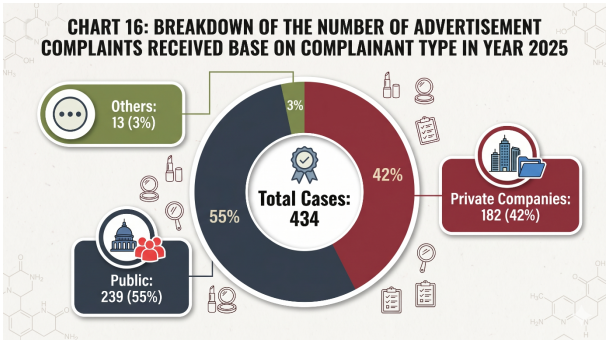
The high proportion of complaints submitted by members of the public (55.1%) reflects increased consumer awareness and vigilance regarding cosmetic safety and advertising compliance. This trend may be attributed to greater public exposure to cosmetic advertisements, particularly through digital and social media platforms, as well as improved accessibility to complaint submission channels (online reporting through NPRA website). Enhanced public education initiatives and timely dissemination of regulatory information have also encouraged consumers to actively report suspected non-compliances, thereby supporting effective post-market surveillance and consumer protection efforts.
Complaints submitted by private companies accounted for 41.9% of the total advertisement-related complaints. This relatively high proportion reflects active industry participation in regulatory compliance, particularly in reporting competitors’ advertisements that may involve misleading, exaggerated, or non-permissible claims. Such complaints are often driven by the need to ensure a level playing field, protect brand reputation, and promote fair competition within the cosmetic market. In this regard, industry feedback serves as an additional surveillance mechanism that complements regulatory monitoring and supports enforcement actions against non-compliant advertising practices.
Investigations confirmed that all complaints received were valid, and appropriate regulatory actions were taken against the respective CNHs. These actions included notification cancellations (32 cases) and issuance of warning letters (32 cases), as summarised in TABLE 2.
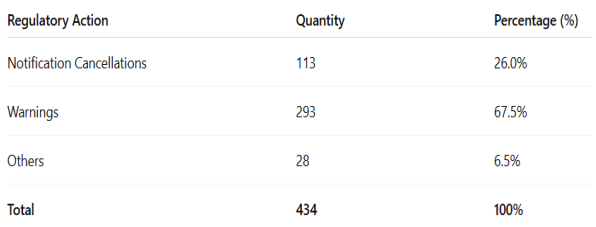
TABLE 2: REGULATORY ACTIONS TAKEN ON ADVERTISEMENT-RELATED COMPLAINTS IN 2025
Of the 434 advertisement-related complaints recorded in 2025, the majority resulted in the issuance of warning letters (67.5%), followed by notification cancellations (26.0%) for more serious non-compliances. The remaining 6.5% involved other regulatory actions, reflecting proportionate and risk-based regulatory measures undertaken by NPRA.
Warning letters were issued for advertisements involving misleading or exaggerated cosmetic claims, and the use of suspicious before-and-after visuals or testimonials that could mislead consumers.
Notification cancellations were imposed for more serious breaches, particularly advertisements containing prohibited medical or therapeutic claims or implying pharmacological effects beyond the scope of cosmetics.
Other regulatory actions were taken in cases involving quantitative claims, particularly advertisements for cosmetics that required the submission of supporting data to substantiate and justify the claims. Examples include claims such as “relieves itchiness within 10 minutes” or “makes users look 5 years younger within 3 months”.
Collectively, these measures demonstrate NPRA’s consistent efforts to ensure responsible advertising practices and protect consumer safety.
6. HANDLING OF MEDICINE SHORTAGE AND DISCONTINUATION REPORTING.
The framework for reporting medicine supply shortages and product discontinuations was established in alignment with Malaysia’s National Medicines Policy (DUNas). This initiative specifically supports the Access to Medicines component under Strategy 2, which emphasizes the development of a systematic monitoring system to mitigate potential disruptions in the national medicine supply chain.
A medicine shortage is characterized as a situation where local availability is insufficient to fulfill public demand for a minimum duration of three (3) months. Medicine discontinuation refers to products that are no longer accessible in the market due to various regulatory or commercial factors, including:
i. Cessation of supply by the Product Registration Holder (PRH) for previously marketed items.
ii. Expiration of registration without renewal.
iii. Voluntary cancellation by the PRH via official withdrawal, or
iv. Mandatory suspension or cancellation by the Drug Control Authority (DCA) based on safety, quality, or efficacy concerns.
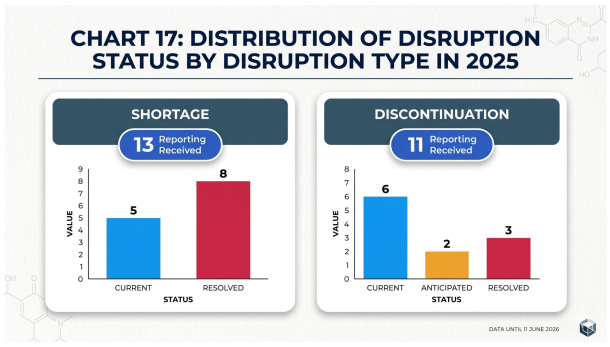
While initially introduced on 1 August 2025, this reporting mechanism remained voluntary until 30 June 2026. As of 31 December 2025, the NPRA had received 24 reports concerning medicine shortages and product discontinuations. It is anticipated that reporting volume will increase following the implementation of the mandatory phase, which commenced on 1 July 2026.
7. PERFORMANCE COMPARISON WITH 2024
7.1 Sampling And Laboratory Testing
7.1.1 Registered Products
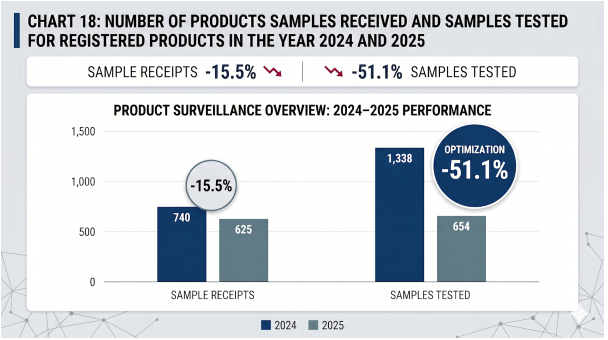
As illustrated in Chart 18, the 2025 data reflects a strategic contraction and optimization of surveillance activities for registered products compared to 2024. Total sample receipts declined by 15.5% (from 740 to 625), while the volume of samples subjected to laboratory analysis decreased significantly from 1,338 to 654—marking a decisive 51.1% drop. Rather than a lapse in oversight, this streamlined testing volume was a direct outcome of transitioning to a targeted approach under the Risk-Based Product Quality Monitoring (RB PQM) Programme. By executing surveillance through a specialized risk matrix tool, product selection was strictly prioritized based on risk characteristics, historical compliance, and active market signals.
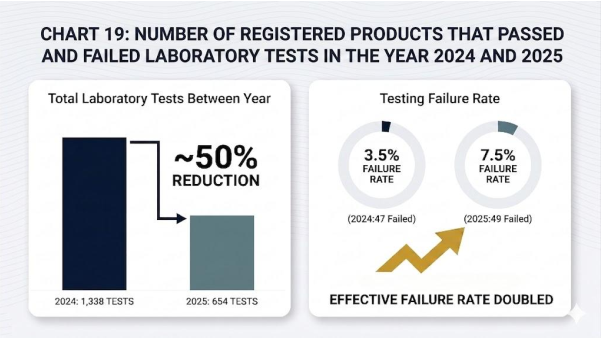
The remarkable effectiveness of this programmatic change is corroborated by the testing results in Chart 19. Despite halving the total laboratory analyses, the absolute number of non-compliant findings remained highly consistent and even increased slightly, moving from 47 failures in 2024 to 49 failures in 2025. This means the testing failure rate effectively doubled from 3.5% to 7.5%, proving that the RB PQM framework successfully directed operational resources toward high-yield risk profiles. This intelligence-driven strategy yields optimized resource utilization, shorter testing turnaround times, significant cost savings, and swifter regulatory enforcement, establishing a significantly more proactive and resilient safety net for public health.
7.1.2 Notified Cosmetics
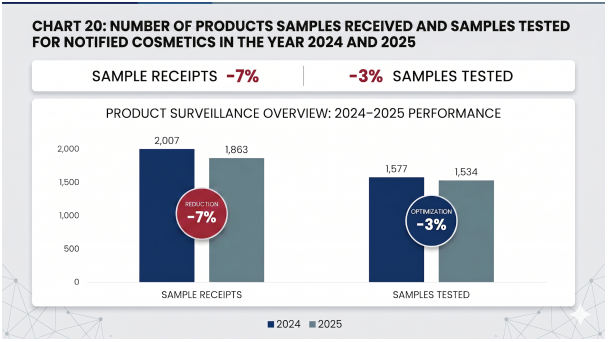
The statistics for 2025 indicate a reduction in surveillance sampling activities compared to 2024. Total sample receipts decreased from 2,007 to 1,863 (a 7% decrease), while the number of samples tested declined from 1,577 to 1,534 (a 3% decrease) as illustrated in Chart 20. Despite this reduction, the number of samples submitted to laboratories for analysis remained consistent with, or increasing marginally from 1,493 to 1,502 (a 1% increase).
TABLE 3: COMPARATIVE OVERVIEW OF ADULTERATED COSMETICS DETECTED VIA SURVEILLANCE
Compared to 2024, the number of adulterated cosmetics identified through Post-Market Surveillance (PMS) activities decreased from 19 to 14 products, representing a 26% decrease.
Despite this reduction, the pattern of adulteration remained largely unchanged, with mercury continuing to be the most frequently detected prohibited substance. Other commonly identified adulterants included hydroquinone, tretinoin, betamethasone 17-valerate, clindamycin, metronidazole, and miconazole. Several cosmetics were found to contain multiple prohibited substances, particularly combinations of hydroquinone, tretinoin, betamethasone 17-valerate, and mercury, indicating the persistent presence of adulterated cosmetics containing multiple scheduled poisons in the market.
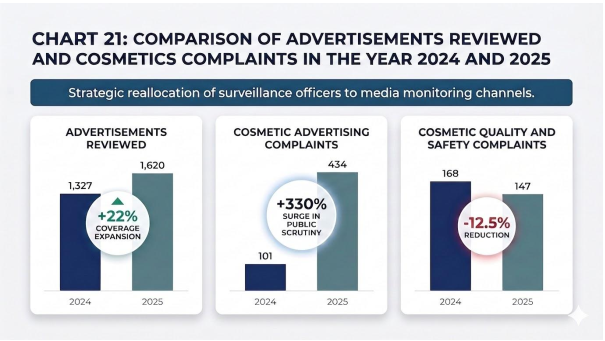
The decrease in sampling activities was a result of management decisions to reallocate officers from surveillance sampling to strengthen advertising monitoring efforts. Consequently, the total number of advertisements reviewed increased significantly from 1,327 to 1,620 (a 22% increase), reflecting broader and more comprehensive coverage across digital and social media platforms.
In parallel, cosmetic advertising complaints rose sharply from 101 cases in 2024 to 434 cases in 2025 (an increase of over 330%). This substantial increase reflects heightened public awareness and intensified scrutiny of cosmetic advertising practices. Contributing factors include:
● Increased public awareness of misleading cosmetic claims,
● Expansion of advertising surveillance activities, and
● Improved accessibility through the introduction of online complaint submission platforms on the NPRA official website (www.npra.gov.my) on 1 July 2025.
Conversely, the total number of cosmetic quality and safety complaints showed a slight decline, decreasing from 168 cases in 2024 to 147 cases in 2025 (a 12.5% decrease). This reduction may be attributed to:
● Improved compliance with cosmetic quality requirements,
● Enhanced consumer education and guidance, and
● More effective preventive regulatory actions.
7.2 Handling Of Report Related To Quality Issue & Handling Of PIC/S Rapid Alert and ASEAN PMAS Alert
7.2.1 Handling Of Report Related To Quality Issue And Follow-up Alert/Directives
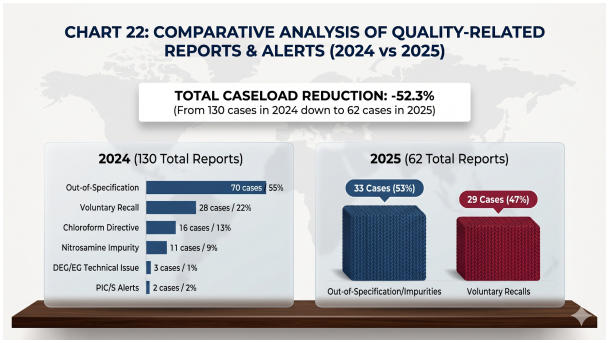
In 2024, a total of 130 quality-related reports were processed. The primary category of these reports was Out-of-Specification (OOS) incidents, which represented 70 cases (55%), followed by voluntary recalls (VR) comprising 28 cases (22%). Additional regulatory activities stemming from the Chloroform Directive, Nitrosamine Impurity concerns, DEG/EG technical issues, and follow-up measures linked to PIC/S alerts accounted for 16 (13%), 11 (9%), 3 (1%), and 2 (2%) reports, respectively.
In 2025, the volume of handled reports totalled 62. Of these, 33 incidents (53%) were classified as Out-of-Specification (OOS) and impurity-related reports, while the remaining 29 cases (47%) were specifically associated with voluntary recall (VR) actions.
A comparative analysis of reports pertaining to product quality and regulatory follow-up alerts/directives reveals a notable decline from 130 cases in 2024 to 62 cases in 2025, representing a significant reduction of 52.3%.
In conclusion, although the aggregate volume of reports decreased in 2025, issues related to Out-of-Specification findings remained a central focus of the agency's quality-related monitoring and surveillance activities.
7.2.2 Handling of PIC/S Rapid Alert
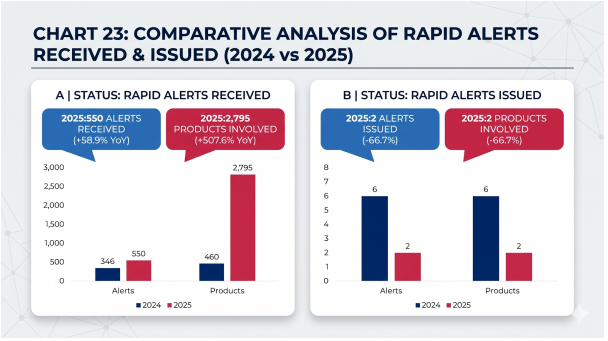
A comparison between 2024 and 2025 shows a substantial increase in the number of rapid alerts received, rising from 346 alerts involving 460 products in 2024 to 550 alerts involving 2,795 products in 2025. This represents an increase of 58.9% in alerts received and a marked increase of 507.6% in the number of products involved, indicating a significantly broader product impact in 2025.
Conversely, the number of rapid alerts issued decreased from six (6) alerts involving six (6) products in 2024 to two (2) alerts involving two (2) products in 2025, reflecting a reduction of 66.7% for both indicators.
Overall, while 2025 recorded a significantly higher volume of rapid alerts received and a substantially larger number of affected products, the number of rapid alerts issued and products involved in issued alerts was considerably lower compared to 2024.
7.2.3 Handling Of Asean PMAS Alert
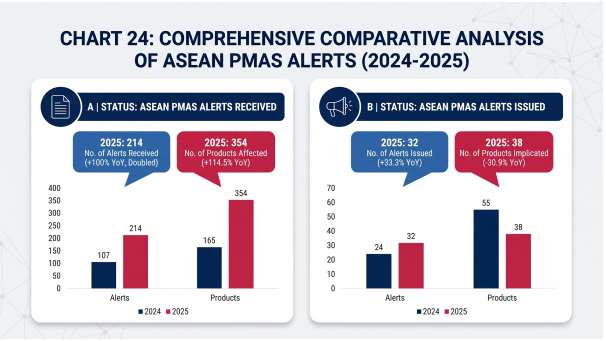
Comparative data between 2024 and 2025 demonstrates a significant surge in received ASEAN PMAS alerts, which doubled from 107 (covering 165 products) to 214 (covering 354 products). This doubling of alert volume, alongside a 114.5% rise in affected products, underscores a heightened level of regional regulatory notification and a broader scope of impacted items during the current year.
There was also a 33.3% rise in the issuance of ASEAN PMAS alerts, increasing from 24 in 2024 to 32 in 2025. Conversely, the volume of products implicated in these issued alerts saw a reduction of 30.9%, falling from 55 items in the previous year to 38 in 2025.
In summary, the statistic in 2025 was characterized by intensified activity regarding both the reception and dissemination of ASEAN PMAS alerts relative to 2024. Although more alerts were processed and shared, the average number of products per issued alert was lower than that recorded during the prior period.
8. CONCLUSION AND WAY FORWARD
The regulatory activities undertaken in 2025 reflect NPRA's continued commitment to safeguarding public health through effective post-market surveillance, regulatory action, and stakeholder engagement. While certain numerical indicators recorded a decrease, these changes represent process optimisation, improved compliance outcomes, and more effective allocation of regulatory resources, rather than a reduction in regulatory effectiveness.
Despite these adjustments in focus, overall performance remained above the targets set for the year, demonstrating the continued effectiveness and resilience of regulatory oversight in safeguarding consumer safety. NPRA will continue to enhance its regulatory strategies through the following initiatives:
8.1 Registered products:
Risk-Based Sampling, Veterinary Product Quality Monitoring (VPQM) and Implementation Testing Requirement for Diethylene Glycol (DEG) and Ethylene Glycol (EG):
In line with the continuous enhancement of post-market surveillance activities, NPRA will further strengthen its risk-based regulatory approach through several key initiatives and focus areas. Beginning in 2026, the risk-based post-market surveillance framework will be expanded to include registered veterinary medicinal products for food-producing animals, enabling more targeted regulatory oversight based on potential public health risks. In addition, the implementation of the Directive on the mandatory testing requirements for Diethylene Glycol (DEG) and Ethylene Glycol (EG) in active pharmaceutical ingredients or excipients, and finished oral liquid medicinal products will take effect from 1 April 2027, further reinforcing preventive measures to safeguard product quality and patient safety.
8.2 Medicine shortages and medicine discontinuations reporting:
Furthermore, the mandatory reporting of medicine shortages and medicine discontinuations, effective from 1 July 2026, will enhance regulatory preparedness and facilitate timely interventions to minimise supply disruptions. Collectively, these initiatives are expected to strengthen the post-market surveillance system, improve regulatory responsiveness, and ensure the continued availability of medicines that are safe, of high quality and effective.
8.3 Notified Cosmetic:
8.3.1 Strengthening Risk-Based Sampling:
Post-market surveillance activities will adopt a more targeted, risk-based approach, with greater emphasis on high-risk cosmetic categories, particularly cosmetics intended for infants and children, as well as cosmetics with a higher likelihood of non-compliance or safety concerns.
8.3.2 Enhancing Advertising Surveillance:
Advertising monitoring activities will continue to be strengthened to improve the detection of non-compliant advertisements across digital platforms. NPRA also aims to explore the integration of Artificial Intelligence (AI)-assisted screening tools to increase the efficiency, coverage, and effectiveness of advertising surveillance.
8.3.3 Publication of the Cosmetic Complaint Reporting Guideline:
The Guideline on the Reporting of Quality, Safety and Advertising Complaints for Notified Cosmetics is targeted for publication on 1 January 2027. The guideline will provide clearer guidance to consumers and industry on complaint submission procedures and reporting requirements, while promoting greater consistency in complaint management.
8.3.4 Digitalisation of Complaint Management:
Building on the successful introduction of the online complaint submission platform in 2025, NPRA aims to transition towards a fully online cosmetic complaint reporting system by 2027. This initiative is expected to improve accessibility, streamline complaint processing, enhance data management, and facilitate more timely regulatory responses.
Prepared by:
Team SVA
July 2026